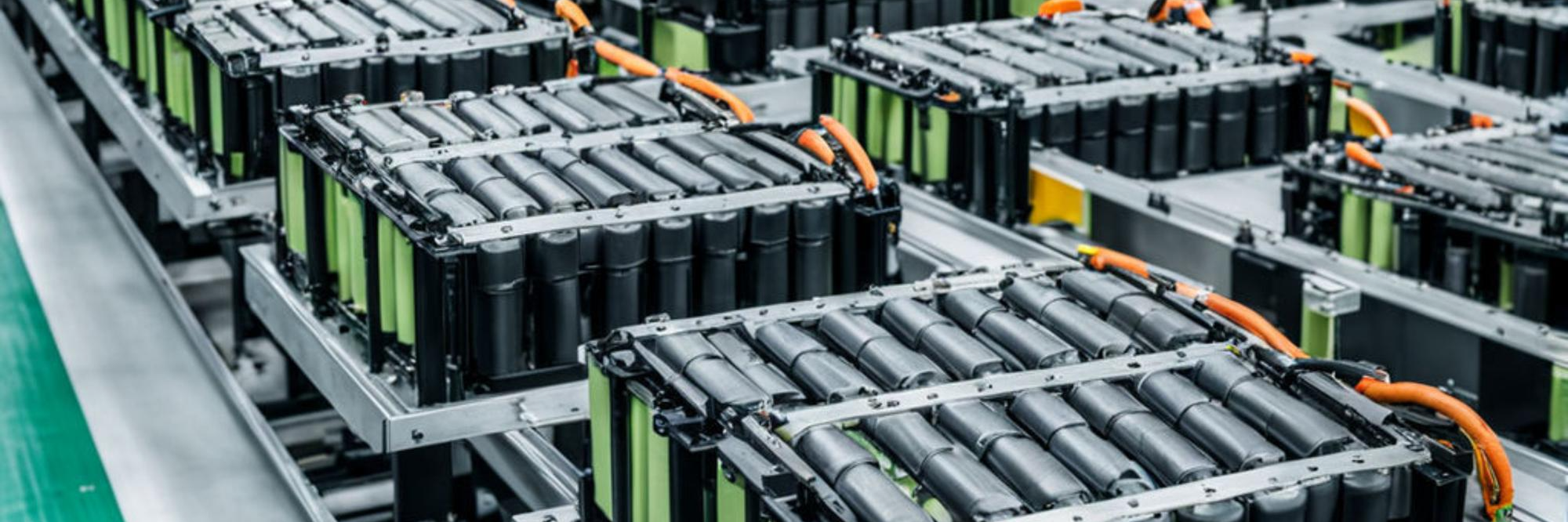
From Cell Chemistry To Certified Pack. Every Battery Tested, Traced, And Released With Confidence.
Battery production spans lithium-ion, solid-state, sodium-ion, lead-acid, nickel-metal hydride, and flow chemistries — each with distinct quality demands. LIMSera equips battery laboratories worldwide with AI-powered automation across every chemistry — from raw material qualification through cell testing, safety certification, and pack-level release.
When Cell Quality Escapes The Lab, The Consequences Are Irreversible.
The global battery industry is scaling across multiple chemistries simultaneously — lithium-ion (NMC, LFP, NCA, LCO) for EVs and grid storage, solid-state for next-generation mobility, sodium-ion for stationary applications, lead-acid for industrial and automotive, and flow batteries for utility-scale energy storage. Each chemistry carries distinct raw material specifications, process control parameters, and safety certification requirements. A single out-of-specification cathode lot, a missed moisture excursion in electrolyte, or an undetected impurity in precursor material can propagate through thousands of cells before the quality deviation surfaces downstream.
OEMs, automotive manufacturers, and energy storage integrators demand full lot-level genealogy — from precursor chemicals through active material synthesis, electrode manufacturing, cell assembly, formation cycling, and pack-level release. They require in-process SPC data, documented safety test records (UN 38.3, IEC 62660, UL 2580), and complete material traceability per cell. Most battery labs still manage this across disconnected cycler software, instrument spreadsheets, and paper-based travellers — with no unified system to correlate incoming material quality with finished cell electrochemical performance.
LIMSera unifies the entire battery quality chain — across every chemistry, every manufacturing stage, and every safety standard — giving battery laboratories the traceability, AI-powered intelligence, and audit-readiness that global battery production demands.
Every Testing Domain Your Battery Lab Covers
Pre-configured for raw material QC, cell performance, safety certification, and process quality — extensible to any new chemistry or format without development.

Raw Material Testing
Incoming QC for active materials across all battery chemistries — Li-ion cathodes (NMC, NCA, LFP, LCO), solid-state electrolytes, sodium-ion precursors, lead oxide paste, anode graphite and silicon, liquid electrolyte solvents and salts, and separator films. LIMSera automates lot-level sampling plans, assigns instrument methods per material class, and enforces release gates before any material enters production. ICP-OES data for elemental impurities flows directly into LIMSera. XRD phase purity, BET surface area, particle size distribution, and tap density results are captured and trended across supplier lots globally.
The Battery Lab Sample Journey, End To End
Incoming QC & Lot Receipt
Raw materials arrive with supplier COAs. LIMSera generates a goods receipt record, assigns a sampling plan based on material type and supplier history, and creates test requests for incoming QC. Every lot is uniquely identified and traceable from first receipt.
Sample Preparation
Sub-samples are prepared per method SOPs — cathode powder digestion for ICP-OES, slurry preparation for particle size, electrolyte extraction for moisture analysis. Sample preparation steps are recorded with operator, time, and reagent lot references.
Instrument Analysis
Results flow directly from ICP-OES, XRD, BET, electrochemical cyclers, and impedance analysers into LIMSera. Automatic unit conversion, range checks, and method verification occur before data reaches the analyst queue.
SPC & Trending Review
Results are plotted against control limits and specification ranges in real time. The AI engine checks for run rule violations, correlates incoming material parameters against previous cell performance data, and flags any anomalous profiles for investigation.
Multi-Tier Review & Approval
Configured approval workflows route results through analyst, senior chemist, and QA manager tiers. Each reviewer sees AI anomaly summaries, historical lot comparisons, and specification status. Override with documented justification is fully audited.
Certificate & Lot Release
Approved results trigger automatic COA generation. Lots passing QC are released to production with a digital release stamp. Failed or quarantined lots are locked with supplier non-conformance notifications and structured CAPA initiation.
Everything Your Battery Quality Lab Needs
Ten purpose-built capabilities designed for the traceability, performance, and safety demands of battery manufacturing.
Incoming Material QC Portal
Structured sampling plans, lot-level receipt logging, and automated specification checks for cathode, anode, electrolyte, and separator materials. Release or reject at the click of a reviewed record.
End-to-End Lot Traceability
Bidirectional traceability from raw material lot number through electrode batch, cell assembly, and finished module. One search surfaces every affected lot when a supplier quality event occurs.
Instrument Integration — ICP-OES, XRD & BET
Direct data ingestion from elemental analysers, X-ray diffractometers, and surface area analysers. Results parsed against specification limits automatically, with flagging before analyst review.
Real-Time SPC Dashboards
Shewhart control charts with configurable Western Electric run rules for all critical process parameters. Out-of-control signals trigger alerts and structured CAPA initiation immediately.
Cell Performance Trending
Capacity fade curves, impedance growth trends, and Coulombic efficiency trajectories tracked across lot, formation tray, and product family. Early degradation signals surfaced before cells reach customers.
Safety Test Protocol Engine
Pre-built and configurable test sequences for UN 38.3, IEC 62660, and OEM-specific abuse protocols. Sequence enforcement, photographic evidence management, and certification dossier generation.
AI Anomaly Detection
Cross-validates raw material assays against historical supplier performance, flags statistical outliers in cell formation data, and identifies process parameter drifts before they produce off-spec cells.
Instrument & Calibration Management
Calibration schedules, drift monitoring, and usage logs for cyclers, impedance analysers, ICP-OES, and environmental chambers. Overdue calibration locks instruments from generating reportable results.
Automated COA Generation
Certificate of Analysis documents generated from verified test data with configurable templates per customer, product family, or OEM requirement. Digital signatures and QR verification included.
Multi-Plant & Multi-Site Support
Centralised data model across gigafactory sites, pilot lines, and contract testing labs. Cross-site benchmarking, unified supplier quality management, and consolidated regulatory reporting.
Every Cathode Lot Verified. Every Supplier Held To Specification. Zero Surprises On The Production Line.
Incoming cathode powders, anode graphite, electrolyte salts, and separator films arrive with supplier COAs — but LIMSera treats every lot as unverified until your own data confirms it. Sampling plans are automatically assigned based on material class, supplier qualification tier, and incoming volume. ICP-OES results for elemental purity, XRD phase composition data, and BET surface area measurements flow directly from instruments into LIMSera, eliminating transcription errors that propagate into release decisions.
Supplier scorecards are built automatically from lot-level test history — tracking first-pass yield, out-of-specification frequency, and delivery accuracy across every incoming shipment. When a new supplier submits qualification samples, LIMSera runs them through your standard incoming QC protocol and generates a qualification report. When a qualified supplier's lot fails, the non-conformance record links directly to the CAPA workflow and the supplier notification — all documented without manual coordination.
From Formation Data To Finished Cell Confidence. AI Validates Every Performance Signal.
Formation cycling generates enormous volumes of capacity, voltage, and Coulombic efficiency data per cell and per tray. LIMSera's AI engine doesn't simply check values against fixed limits — it analyses formation signatures relative to the cell's incoming material lot characteristics. If a cathode lot with elevated Mn content produces cells with higher first-cycle capacity loss, that correlation is identified and flagged for engineering review before the lot reaches the shipment queue.
Impedance spectra from EIS testing are parsed and decomposed into resistance components that track electrolyte interface health, SEI layer development, and charge transfer kinetics. Trend models predict capacity fade trajectories from early cycle data — enabling earlier identification of latent quality issues that would otherwise only manifest after extended customer use. AI anomaly scores are surfaced at every review stage, giving analysts and quality managers the context they need to make faster, better-informed release decisions.
Control Every Critical Process Parameter. Detect Drift Before It Produces Off-Spec Cells.
LIMSera receives in-process measurement data from coating lines, calendering equipment, electrolyte filling stations, and formation cycling racks. Shewhart control charts with Western Electric run rules are maintained in real time for coating weight, electrode thickness, porosity, electrolyte fill weight, and formation capacity. When a run rule violation is detected — a trend of seven consecutive points rising, or a point beyond three sigma — an alert is generated immediately and an optional CAPA record is initiated.
Cross-parameter correlation dashboards surface relationships that single-parameter monitoring misses. When electrolyte fill weight variability increases on a particular line, LIMSera's correlation engine checks whether affected cells show elevated impedance in subsequent formation testing. When electrode coating weight drifts upward, the system projects the impact on cell energy density based on historical process-performance relationships. Process capability indices (Cp, Cpk) are maintained per parameter, per line, and per product family — updated continuously as new data arrives.

Audit-Ready Infrastructure Built In. Not Bolted On.
Tamper-Proof Audit Trail
Every result entry, edit, approval, and lot release action is timestamped, user-attributed, and permanently recorded. AI flags anomalous approval patterns for quality review before OEM audits.
Instrument Calibration
Centralised calibration register for cyclers, impedance analysers, ICP-OES, and environmental chambers. Overdue calibration locks the instrument from generating reportable results automatically.
CAPA & Non-Conformance
Structured workflows for out-of-specification lots, out-of-control process events, and supplier non-conformances — from root cause analysis through corrective action verification and formal closure.
Measurement Uncertainty
Uncertainty budgets maintained per test method and instrument. Propagated through result calculations and reported on certificates of analysis per ISO/IEC 17025 and customer requirements.
Designed For Every Role In The Battery Quality Ecosystem
Structured incoming inspection checklists, barcode-linked lot receipt, sampling plan auto-assignment, and real-time specification pass/fail status per material
Pre-loaded test methods per material type, direct instrument data ingestion, automated range checks, and AI-assisted outlier flagging before approval submission
Real-time SPC dashboards for electrode coating, electrolyte fill, and formation cycling with run rule alerts and correlation analysis to finished cell performance
End-to-end lot traceability, CAPA management dashboards, supplier quality scorecards, and ISO 17025 accreditation readiness reporting across all sites
Cross-site quality benchmarking, throughput KPIs, right-first-time yield metrics, and escalation dashboards for out-of-control events and supplier non-conformances
On-demand access to traceability chains, calibration records, safety test dossiers, and audit trails — structured for OEM supplier qualification audits and regulatory inspections
Frequently Asked Questions
Ready To Modernise Your Battery Quality Lab?
See LIMSera configured for your cell chemistry, your material types, your safety protocols, and your OEM compliance requirements — in a live walkthrough.
A live walkthrough configured for your laboratory. No generic demos.