
Every Measurement Traceable. Every Uncertainty Quantified.
Calibration and legal metrology laboratories worldwide are guardians of measurement integrity. LIMSera gives calibration labs — from NIST-traceable facilities in North America to PTB-linked laboratories in Europe and NMI-accredited labs across Asia-Pacific — the workflow automation, uncertainty computation, and traceability infrastructure to deliver accurate certificates at scale.
When Calibration Data Is Unreliable, Every Measurement In Your Customer's Lab Is Suspect.
Calibration and legal metrology laboratories worldwide manage instrument fleets spanning dozens of measurement disciplines — from precision dimensional metrology and mass calibration to electrical parameter verification and legal weights and measures compliance. Each instrument demands a specific procedure, traceable reference standards linked to BIPM through national measurement institutes (NIST, PTB, NPL, NMI, KRISS), controlled environmental conditions, and a defensible uncertainty budget per GUM. A single gap in the traceability chain can invalidate a certificate — and every measurement made with that instrument downstream.
Whether operating under ILAC-accredited ISO/IEC 17025 scopes in Europe, A2LA or NVLAP accreditation in the United States, NABL in India, or JIS Q 17025 in Japan, calibration labs face the same fundamental challenge: paper worksheets, Excel uncertainty calculations, and manually assembled certificates cannot scale. Reference standard validity is tracked in spreadsheets. Environmental conditions are hand-recorded. Legal metrology verification records are compiled manually for weights and measures authorities.
LIMSera digitises the entire calibration and legal metrology chain — from customer instrument receipt through procedure-guided measurement, OIML-compliant weights and measures verification, to auto-generated certificates with GUM uncertainty statements and globally verifiable traceability records.
Every Measurement Discipline Your Lab Covers
Pre-configured for dimensional, mechanical, weights and measures, thermal, electrical, volumetric, and optical calibrations — extensible to any measurement parameter worldwide.
Dimensional, Mechanical & Weights
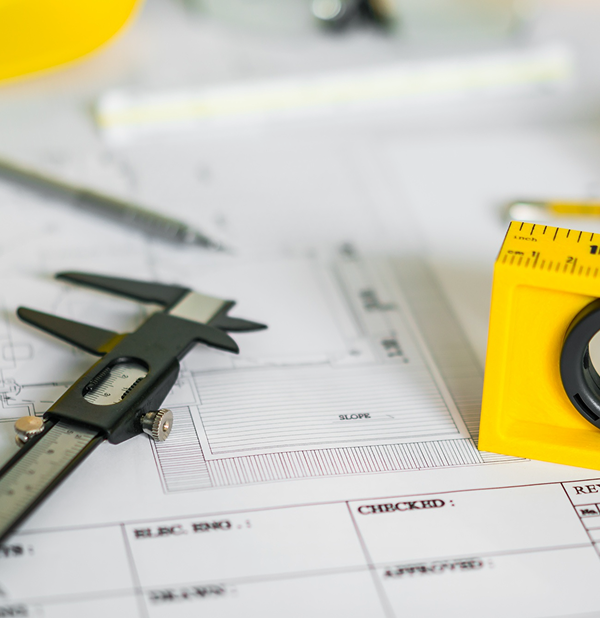
Calibrate gauge blocks, micrometers, callipers, dial indicators, torque wrenches, force gauges, hardness testers, pressure transducers, weighing balances, and legal metrology weights and measures. LIMSera manages mass calibration per OIML R 111, legal metrology verification per national weights and measures regulations worldwide, and commercial weighing instrument certification. As-found and as-left readings, GUM uncertainty budgets, and auto-generated certificates with traceability to BIPM, NIST, PTB, NPL, or any national measurement institute globally.
The Calibration Workflow, End To End
Customer Request & Scheduling
Customers submit calibration requests through the self-service portal or the lab receives instruments directly. The system checks the instrument registry, loads the applicable procedure, and schedules the calibration based on technician availability and instrument type.
Instrument Receipt & Inspection
Instruments are received with barcode or QR scanning. The system logs receipt condition, verifies serial number against the customer record, and checks for any special instructions or tolerance requirements. Damaged or non-functional items are flagged with photo documentation.
Calibration Execution
Technicians follow the linked procedure with guided measurement point entry. As-found readings are recorded, adjustments documented, and as-left readings captured. Environmental conditions are auto-logged from connected sensors throughout the calibration session.
Uncertainty Calculation
The system calculates measurement uncertainty automatically using the procedure's defined uncertainty budget. Type A statistical components are computed from repeated readings. Combined and expanded uncertainties are generated with the specified coverage factor.
Technical Review & Approval
Results pass through a tiered review workflow. Reviewers verify measurement data, uncertainty calculations, traceability chain, and environmental compliance. AI flags anomalous readings or drift patterns for additional scrutiny.
Certificate Issuance & Delivery
Calibration certificates are auto-generated with measurement results, uncertainty statements, traceability information, and environmental conditions. Certificates are delivered via the customer portal, email, or print — each carrying a QR code for digital verification.
Everything Your Calibration Lab Needs
Customer Instrument Registry
Digital registry for every customer instrument with make, model, serial number, calibration history, and due-date management. Customer-specific pricing and SLA tracking built in.
Calibration Procedure Library
Versioned procedure library linked to national and international standards. Each procedure defines measurement points, acceptance criteria, environmental requirements, and uncertainty contributors.
Uncertainty Budget Engine
Structured uncertainty budgets per GUM methodology. Type A and Type B components, sensitivity coefficients, correlation handling, and expanded uncertainty with configurable coverage factors.
Global Reference Standard Traceability
Complete traceability chain from working standards through reference standards to BIPM via NIST, PTB, NPL, NMI, KRISS, or any national measurement institute worldwide. Certificate linkages, validity tracking, and ILAC MRA compliance.
Environmental Condition Monitoring
Continuous logging of temperature, humidity, and atmospheric pressure during calibration. Auto-validation against procedure requirements. Non-compliant conditions flagged before results are recorded.
As-Found / As-Left Recording
Structured capture of as-found and as-left readings with automatic pass/fail determination against customer and procedure tolerances. Adjustment history tracked per instrument.
Digital Certificate Generation
Auto-generated calibration certificates with measurement results, uncertainty statements, traceability information, and environmental conditions. PDF, digital signature, and QR-code verification.
Due-Date & Recall Management
Automated due-date calculation, customer notification workflows, and recall scheduling. AI predicts optimal recalibration intervals based on historical drift patterns.
AI Drift Prediction
Machine learning analyses historical calibration data to predict instrument drift trajectories. Identifies instruments likely to go out of tolerance before their next scheduled calibration.
Multi-Location Support
Manage calibration operations across multiple laboratories and on-site service locations from a single deployment. Location-specific environmental records and instrument assignments.
From Instrument Receipt To Signed Certificate. Every Step Guided.
LIMSera replaces unstructured calibration worksheets with a guided digital workflow. When an instrument arrives, the system identifies it by barcode, loads the applicable procedure, and presents the technician with a structured entry form — measurement points, stabilisation criteria, acceptance tolerances, and environmental requirements all defined in advance.
As-found and as-left readings are captured in a controlled sequence. Environmental conditions are logged automatically from connected temperature and humidity sensors. Adjustment actions are documented with before-and-after comparisons. The complete calibration record — from receipt inspection to final certificate — is assembled without manual document compilation.
Uncertainty Budgets That Calculate Themselves. Drift That Predicts Itself.
Measurement uncertainty is not an afterthought in LIMSera — it is embedded in the calibration procedure itself. Each procedure carries a structured uncertainty budget with defined Type A and Type B contributors. When a technician completes a calibration, the system computes combined uncertainty from the actual readings, applies the specified coverage factor, and presents the expanded uncertainty on the certificate — automatically.
The AI drift engine goes further. It analyses as-found readings across multiple calibration cycles for each instrument, builds a drift trajectory model, and predicts when the instrument will exceed its tolerance. Instruments trending toward out-of-tolerance are flagged for early recalibration. Stable instruments may have their intervals extended — optimising lab resources without compromising measurement integrity.
Your Customers See Their Instruments. In Real Time. On Their Terms.
LIMSera's customer portal transforms calibration from a black box into a transparent service. Customers log in to see every instrument they have ever submitted — current status, calibration history, upcoming due dates, and downloadable certificates. New calibration requests are submitted directly through the portal with preferred date, special instructions, and tolerance requirements.
Certificates are generated automatically with measurement results, uncertainty statements, traceability information, and environmental conditions. Each certificate carries a QR code that links to the digital record for third-party verification. Recall notifications reach customers by email and SMS based on configurable lead times before due dates.

Accreditation Infrastructure Built In. Not Bolted On.
Tamper-Proof Audit Trail
Every calibration event, result entry, adjustment, and approval is timestamped, user-attributed, and permanently recorded in an immutable log.
Reference Standard Traceability
Complete digital traceability chain from working standards through reference standards to national measurement institutes. Certificate linkages at every level.
CAPA & Nonconformance
Structured workflows for out-of-tolerance findings, root cause analysis, corrective action, effectiveness verification, and formal closure with audit documentation.
CMC, Uncertainty & Legal Metrology
Calibration and Measurement Capability declarations maintained per accreditation scope. OIML-compliant weights and measures verification records. Uncertainty budgets validated against proficiency test results and ILAC MRA requirements.
Designed For Every Role In Your Calibration Laboratory
Guided procedure execution, auto-calculated uncertainties, environmental condition logging, and structured as-found/as-left entry
Uncertainty budget management, GUM-compliant calculations, reference standard traceability, and inter-laboratory comparison tracking
Technician workload dashboards, instrument throughput KPIs, due-date compliance tracking, and capacity planning tools
Audit trail review, CAPA management, proficiency testing records, and accreditation readiness dashboards
Customer portal management, SLA tracking, certificate delivery, and recall notification workflows
Read-only audit access to traceability chains, uncertainty budgets, environmental records, and approval histories
Frequently Asked Questions
Ready To Modernise Your Calibration Laboratory?
See LIMSera configured for your measurement disciplines, your uncertainty requirements, and your accreditation scope.
A live walkthrough configured for your laboratory. No generic demos.